link ads ;

10 most beautiful waterfall in the world

Posted by Unknown Aug 11, 2011 0 comments
The waterfall is a natural appearance with a charm of their own, cut the water accompanied by tupahan occasional water from the sun can cause emissions to be like a rainbow waterfall makes the iconic romantic nature. In this world there are many waterfalls to own a very impressive natural beauty, but by site Listphobia, there are 10 waterfall considered the 10 most beautiful waterfalls in the world.

Here is a list of 10 most beautiful waterfalls in the world:

10. Steinsdalsfossen waterfall 


9. McWay Falls 


8. Alamere Falls 


7. Burney Falls 


6. Baatara Gorge Waterfall 


5. Beaver Falls 


4. High Force 


3. Fulmer Falls 


2. Silverthread Falls 


1. Umpang Thee Lor Sue Waterfall 


source:http://serba-sepuluh.blogspot.com/2010/08/daftar-10-air-terjun-terindah-di-dunia.html

7 important words in different languages ​​in the world

Posted by Unknown Aug 10, 2011 0 comments

1. "THANK YOU" IN DIFFERENT LANGUAGES 


1. English: Thank You, Thanks, Thank You Very Much 
2. French: Merci, Merci beaucoup 
3. German: Danke 
4. Spanish: Gracias 
5. Japanese: Arigato, Arigato Gozaimasu, Arigato Gozaimashita 
6. Dutch: Dank Je 
7. Italian: Grazie 
8. Portuguese: Obrigado 
9. Korean: Gamsa-hamnida 
10. Mandarin: Xie-xie 
11. Arabic: Syukron 
12. Hebrew: Toda 
13. Afrikaans: Dankie, Baie Dankie 
14. Ancient Egyptian Language: Two Netjer en ek (to cowo), Two Netjer etj (the girls) 
15. Greek: Sas efharisto, efcharisto
 16. Indian Languages: Danyavad, Dhanyawaad, Shukriya 
17. Icelandic: Takk, Takk fyrir 
18. Finnish: Kiitos, Kiitoksia 
19. Wales Language: Diolch yn fawr 
20. Tagalog: Salamot 
21. Thai language: Khwap Khun, Khun khwap khrap 
22. Tibetan: Tujechhe 
23. Scottish Language: Thank ye, Ye Thenk 
24. Sanskrit: Anugurihiitusomi 
25. Romanian: Multumesc

2. "I LOVE YOU" IN DIFFERENT LANGUAGES 


English – I love you
Afrikaans – Ek het jou lief
Albanian – Te dua
Arabic – Ana behibak (to male)
Arabic – Ana behibek (to female)
Armenian – Yes kez sirumen
Bambara – M’bi fea
Bangla – Aamee tuma ke bhalo aashi
Belarusian – Ya tabe kahayu
Bisaya – Nahigugma ako kanimo
Bulgarian – Obicham te
Cambodian – Soro lahn nhee ah
Cantonese Chinese – Ngo oiy ney a
Catalan – T’estimo
Cheyenne – Ne mohotatse
Chichewa – Ndimakukonda
Corsican – Ti tengu caru (to male)
Creol – Mi aime jou
Croatian – Volim te
Czech – Miluji te
Danish – Jeg Elsker Dig
Dutch – Ik hou van jou
Esperanto – Mi amas vin
Estonian – Ma armastan sind
Ethiopian – Afgreki’
Faroese – Eg elski teg
Farsi – Doset daram
Filipino – Mahal kita
Finnish – Mina rakastan sinua
French – Je t’aime, Je t’adore
Gaelic – Ta gra agam ort
Georgian – Mikvarhar
German – Ich liebe dich
Greek – S’agapo
Gujarati – Hoo thunay prem karoo choo
Hiligaynon – Palangga ko ikaw
Hawaiian – Aloha wau ia oi
Hebrew – Ani ohev otah (to female)
Hebrew – Ani ohev et otha (to male)
Hiligaynon – Guina higugma ko ikaw
Hindi – Hum Tumhe Pyar Karte hae
Hmong – Kuv hlub koj
Hopi – Nu’ umi unangwa’ta
Hungarian – Szeretlek
Icelandic – Eg elska tig
Ilonggo – Palangga ko ikaw
Indonesian – Saya cinta padamu
Inuit – Negligevapse
Irish – Taim i’ ngra leat
Italian – Ti amo
Japanese – Ai shi teru
Kannada – Naanu ninna preetisuttene
Kapampangan – Kaluguran daka
Kiswahili – Nakupenda
Konkani – Tu magel moga cho
Korean – Sarang Heyo
Latin – Te amo
Latvian – Es tevi miilu
Lebanese – Bahibak
Lithuanian – Tave myliu
Malay – Saya cintakan mu / Aku cinta padamu
Malayalam – Njan Ninne Premikunnu
Mandarin Chinese – Wo ai ni
Marathi – Me tula prem karto
Mohawk – Kanbhik
Moroccan – Ana moajaba bik
Nahuatl – Ni mits neki
Navaho – Ayor anosh’ni
Norwegian – Jeg Elsker Deg
Pandacan – Syota na kita!!
Pangasinan – Inaru Taka
Papiamento – Mi ta stimabo
Persian – Doo-set daaram
Pig Latin – Iay ovlay ouyay
Polish – Kocham Ciebie
Portuguese – Eu te amo
Romanian – Te iubesc
Russian – Ya tebya liubliu
Scot Gaelic – Tha gra’dh agam ort
Serbian – Volim te
Setswana – Ke a go rata
Sign Language – ,\,,/ (represents position of fingers when signing’I Love You’)
Sindhi – Maa tokhe pyar kendo ahyan
Sioux – Techihhila
Slovak – Lu`bim ta
Slovenian – Ljubim te
Spanish – Te quiero / Te amo
Swahili – Ninapenda wewe
Swedish – Jag alskar dig
Swiss-German – Ich lieb Di
Tagalog – Mahal kita
Taiwanese – Wa ga ei li
Tahitian – Ua Here Vau Ia Oe
Tamil – Nan unnai kathalikaraen
Telugu – Nenu ninnu premistunnanu
Thai – Chan rak khun (to male)
Thai – Phom rak khun (to female)
Turkish – Seni Seviyorum
Ukrainian – Ya tebe kahayu
Urdu – mai aap say pyaar karta hoo
Vietnamese – Anh ye^u em (to female)
Vietnamese – Em ye^u anh (to male)
Welsh – ‘Rwy’n dy garu
Yiddish – Ikh hob dikh
Yoruba – Mo ni fe

3. IED MUBARAK / LEBARAN GREETING  IN VARIOUS LANGUAGES
 
Indonesia : Selamat Lebaran, Selamat Idul Fitri
Banjar : Salamat Bahari raya
Jawa : Sugeng Riyadin
Padang : Selamet Idul Fitri
Sunda : Wilujeng boboran siyam
Afghanistan : Kochnay Akhtar
Arab : Aid Mubarok
Bangladesh : Rojar Eid
Belanda : Eigendom Mubarak
Bosnia : Ramazanski Bajram
Bulgaria : Pritezhavani Mubarak
Chech : Vlastnictvi Mubarak
Cina : Guoyou Mubalake
Denmark : Ejet Mubarak
Finladia : Omistama Mubarakiin
Inggris : Happy Eid El Fitr
Israel : Bebe’lanat Mawba’rak
Itali : Proprieta Mubarak
Jepang : Chuuko Mubaraku
Jerman : Besitz Mubarak
Korea : Junggo mubarakeu
Kroasia : Vlasnistvu Mubarak
Kurdishtan : Cejna Remezanê
Malaysia : Salam Aidilfitri
Mesir : Ed Karim atau Eid Sahid
Nigeria : Sallah
Perancis : Fete de l’aid
Persia Iran : Eid-e-Sayed Fitr
Polandia : Wlasnosia Mubarak
Portugis : Mubarak propriedade
Rumania : Mubarak aflate in proprietatea
Rusia : Prinadlezhashchikh Mubarakj
Senegal : Korite
Spanyol : Mubarak, de propiedad
Swedia : Agda Mubarak
Turki : Ramazan Bayrami
Urdu India : Choti Eid
Yunani : Aneekoeen Moeemparak

 
4. "HAPPY NEW YEAR" IN DIFFERENT LANGUAGES

 
AFRIKAANS gelukkige nuwejaar
ALBANIAN Gëzuar vitin e ri
ALSATIAN e glëckliches nëies / güets nëies johr
ARABIC aam saiid / sana saiida
ARMENIAN shnorhavor nor tari
AZERI yeni iliniz mubarek
BAMBARA bonne année
BASQUE urte berri on
BELARUSIAN З новым годам (Z novym hodam)
BENGALI subho nababarsho
BERBER asgwas amegas
BETI mbembe mbu
BOBO bonne année
BOSNIAN sretna nova godina
BRETON bloavezh mat / bloavez mad
BULGARIAN честита нова година (chestita nova godina)
BURMESE hnit thit ku mingalar pa
CANTONESE kung hé fat tsoi
CATALAN bon any nou
CHINESE xin nian kuai le / xin nian hao
CORSICAN pace e salute
CROATIAN sretna nova godina
CZECH šťastný nový rok
DANISH godt nytår
DUTCH gelukkig Nieuwjaar
ESPERANTO felicxan novan jaron
feliæan novan jaron (Times SudEuro font)
ESTONIAN head uut aastat
FAROESE gott nýggjár
FINNISH onnellista uutta vuotta
FLEMISH gelukkig Nieuwjaar
FRENCH bonne année
FRISIAN lokkich neijier
FRIULAN bon an
GALICIAN feliz aninovo
GEORGIAN გილოცავთ ახალ წელს (gilocavt akhal tsels)
GERMAN ein gutes neues Jahr / prost Neujahr
GREEK kali chronia / kali xronia
eutichismenos o kainourgios chronos (we wish you a happy new year)
GUJARATI sal mubarak
GUARANÍ rogüerohory año nuévo-re
HAITIAN CREOLE bònn ané
HAWAIIAN hauoli makahiki hou
HEBREW shana tova
HINDI nav varsh ki subhkamna
HMONG nyob zoo xyoo tshiab
HUNGARIAN boldog új évet
ICELANDIC farsælt komandi ár
INDONESIAN selamat tahun baru
IRISH GAELIC ath bhliain faoi mhaise
ITALIAN felice anno nuovo, buon anno
JAVANESE sugeng warsa enggal
JAPANESE akemashite omedetô
KABYLIAN asseguèsse-ameguèsse
KANNADA hosa varshada shubhaashayagalu
KAZAKH zhana zhiliniz kutti bolsin
KHMER sur sdei chhnam thmei
KIRUNDI umwaka mwiza
KOREAN seh heh bok mani bat uh seyo
KURDE sala we ya nû pîroz be
LAO sabai di pi mai
LATIN felix sit annus novus
LATVIAN laimīgu Jauno gadu
LIGURIAN feliçe annu nœvu / feliçe anno nêuvo
LINGALA bonana / mbula ya sika elamu na tonbeli yo
LITHUANIAN laimingų Naujųjų Metų
LOW SAXON gelükkig nyjaar
LUXEMBOURGEOIS e gudd neit Joër
MACEDONIAN srekna nova godina
MALAGASY arahaba tratry ny taona
MALAY selamat tahun baru
MALTESE is-sena t-tajba
MAORI kia hari te tau hou
MARATHI navin varshaachya hardik shubbheccha
MONGOLIAN shine jiliin bayariin mend hurgeye (Шинэ жилийн баярын мэнд хvргэе)
MORÉ wênd na kô-d yuum-songo
NORWEGIAN godt nyttår
OCCITAN bon annada
PERSIAN sâle no mobârak
POLISH szczęśliwego nowego roku
PORTUGUESE feliz ano novo
ROMANCHE bun di bun onn
ROMANI bangi vasilica baxt
ROMANIAN un an nou fericit / la mulţi ani
RUSSIAN С Новым Годом (S novim godom)
SAMOAN ia manuia le tausaga fou
SANGO nzoni fini ngou
SARDINIAN bonu annu nou
SCOTTISH GAELIC bliadhna mhath ur
SERBIAN srećna nova godina
SHIMAORE mwaha mwema
SHONA goredzwa rakanaka
SINDHI nain saal joon wadhayoon
SINHALA suba aluth avuruddak vewa
SLOVAK stastlivy novy rok
SLOVENIAN srečno novo leto
SOBOTA dobir leto
SPANISH feliz año nuevo
SRANAN wan bun nyun yari
SWAHILI mwaka mzuri / heri ya mwaka mpya
SWEDISH gott nytt år
SWISS-GERMAN es guets Nöis
TAGALOG manigong bagong taon
TAHITIAN ia orana i te matahiti api
TAMIL iniya puthandu nalVazhthukkal
TATAR yaña yıl belän
TELUGU nuthana samvathsara subhakankshalu
THAI สวัสดีปีใหม่ (sawatdii pimaï)
TIBETAN tashi délek
TURKISH yeni yiliniz kutlu olsun
UDMURT Vyľ Aren
UKRAINIAN Z novym rokom
URDU naya saal mubarik
UZBEK yangi yilingiz qutlug’ bo’lsin
VIETNAMESE Chúc Mừng Nǎm Mới / Cung Chúc Tân Niên / Cung Chúc Tân Xuân
WALOON (“betchfessîs” spelling) bone annéye / bone annéye èt bone santéye
WELSH blwyddyn newydd dda
WEST INDIAN CREOLE bon lanné
WOLOF dewenati
YIDDISH a gut yohr


5. ACKNOWLEDGMENTS HAPPY FASTING IN DIFFERENT LANGUAGES 

 
6. CONGRATULATIONS Greeting fasting in 53 world languages.

 
Afrikaans: Happy Vas
Albanian: agjërimi Happy
Arabic: Sa’id Shiyam (سعيد صيام)
Armenian: Shnorhavor tsomapahut’yan
Azerbaijani: Happy oruc
Basque: Happy barau
Belarusian: Scaslivy pasta
Bulgarian: Chestit gladno
Catalan: Feliç dejuni
Chinese: Kuaile jin shi
Croatian: sretan posta
Czech: Happy pust
Danish: Happy fastende
Dutch: Happy vasten
English: Happy Fasting
Estonian: palju tüja kõhu
Filipino: Happy pag-aayuno
Finnish: Happy paasto
French: Heureux le jeûne
Galician: Feliz xaxún
German: Glückliche Fasten
Georgian: bednieri samarkhoa
Greek: Happy niste�*a
Haitian Creole: Kontan jeun
Hindi: Haippi upavasa
Hungarian: Boldog éhomi
Icelandic: Til hamingju með fasta
Indonesian: Selamat Berpuasa
Irish: troscadh Happy
Italian: Felice digiuno
Japanese: Happi danjiki
Korean: haepi geumsig
Latvian: Happy badosanas
Lithuanian: Happy nevalgius
Macedonian: sreken post
Malay: Selamat Berpuasa
Maltese: Happy Sawm
Norwegian: Happy Fastende
Polish: Happy czczo
Portuguese: Feliz jejum
Romanian: Fericit post
Russian: schastlivyi posta
Serbian: srecan post
Slovak: Happy pôst
Slovenian: Happy tesce
Spanish: Feliz ayuno
Swahili: Happy kufunga
Swedish: Glad fasta
Thai: Fasting Happy
Turkish: mutlu açlik
Ukrainian: shchaslyvyy posta
Vietnamese: Happy an chay
Welsh: Happy ymprydio


7. Happy Birthday in World Languages
 
Afrikaans: Veels geluk met jou verjaarsdag!
Albanian: Urime ditelindjen!
Alsatian: Gueter geburtsdaa!
Amharic: Melkam lidet!
Arab: Eid milaad saeed! or Kul sana wa inta/i tayeb/a! (masculine/feminine)
Armenian: Taredartzet shnorhavor! or Tsenund shnorhavor!
Assyrian: Eida D’moladukh Hawee Brikha!
Austrian-Viennese: Ois guade winsch i dia zum Gbuadsdog!
Aymara (Bolivia): Suma Urupnaya Cchuru Uromankja!
Azerbaijani: Ad gununuz mubarek! — for people older than you /Ad gunun mubarek! — for people
younger than you
Basque: Zorionak!
Belauan-Micronesian: Ungil el cherellem!
Bengali (Bangladesh/India): Shuvo Jonmodin!
Bicol (Philippines): Maogmang Pagkamundag!
Bislama (Vanuatu): Hapi betde! or Yumi selebretem de blong bon blong yu!
Brazil arabŽns a voc�! ParabŽns a voc�, nesta data querida muitas felicidades e muitos anos de vida.
Breton: Deiz-ha-bloaz laouen deoc’h!
Bulgarian: Chestit Rojden Den!
Cambodian: Som owie nek mein aryouk yrinyu!
Catalan: Per molts anys! or Bon aniversari! or Moltes Felicitats!
Chamorro: Biba Kumplianos!
Chinese-Cantonese: Sun Yat Fai Lok!
Chinese: Fuzhou San Ni Kuai Lo!
Chiness-Hakka: Sang Ngit Fai Lok!
Chinese-Mandarin: qu ni sheng er kuai le
Chinese-Shanghaiese: San ruit kua lok!
Chinese-Tiociu: Se Jit khuai lak!
Chronia: Polla NA ZHSHS
Croatian: Sretan Rodendan!
Czech: Vsechno nejlepsi k Tvym narozeninam!!
Danish: Tillykke med fodselsdagen!
Belanda-Antwerps: Ne gelukkege verjoardach!
Belanda-Bilzers: Ne geleukkege verjoardoag!
Belanda-Drents: Fellisiteert!
Belanda-Flemish: Gelukkige verjaardag! or Prettige verjaardag!
Belanda-Frisian: Fan herte lokwinske!
Belanda-Limburgs: Proficiat! or Perfisia!
Belanda-Spouwers: Ne geleukkege verjeurdoag!
Belanda-Twents: Gefeliciteard met oen’n verjoardag!
Belanda: Hartelijk gefeliciteerd! or Van harte gefeliciteerd met je verjaardag!
Inggris: Happy Birthday!
Esperanto: Felichan Naskightagon!
Estonian: Palju onne sunnipaevaks!
Euskera: Zorionak zure urtebetetze egunean!
Faroes ( Faroe island ): Tillukku vid fodingardegnum!
Farsi: Tavalodet Mobarak!
Finnish: Hyvaa syntymapaivaa!
Perancis: (Canada) Bonne Fete!
Perancis: Joyeux Anniversaire!
Frisian: Lokkiche jierdei!
Gaelic (Irish): L‡ breithe mhaith agat!
Gaelic (Scottish): Co` latha breith sona dhuibh!
Galician (Spain): Ledicia no teu cumpreanos!
Georgian: Gilotcav dabadebis dges!
Jerman-Badisch: Allis Guedi zu dim Fescht!
Jerman-Bavarian: Ois Guade zu Deim Geburdstog!
Jerman-Berlinisch: Allet Jute ooch zum Jeburtstach! or Ick wuensch da allet Jute zum Jeburtstach!
Jerman-Bernese: Es Muentschi zum Geburri!
Jerman-Camelottisch: Ewllews Gewtew zewm Gewbewrtstewg. Mew!
Jerman-Frankonian: Allmecht! Iich wuensch Dir aan guuadn Gebuardsdooch!
Jerman-Lichtenstein: Haerzliche Glueckwuensche zum Geburtstag!
Jerman-Moselfraenkisch: Haezzlische Glickwunsch zem Gebordsdach!
Jerman-Plattdeutsch: Ick wuensch Di allns Gode ton Geburtsdach!
Jerman-Rhoihessisch: Ich gratelier Dir aach zum Geburtstag!
Jerman-Ruhr: Allet Gute zum Gebuatstach!
Jerman-Saarlaendisch: Alles Gudde for dei Gebordsdaach!
Jerman-Saechsisch: Herzlischen Gliggwunsch zum Geburdsdaach!
Jerman-Schwaebisch: Aelles Guade zom Gebordzdag!
Jerman-Wienerisch: Ois Guade zum Geburdsdog!
Jerman: Alles Gute zum Geburtstag!
Yunani: Eytyxismena Genethlia! or Chronia Pola!
Greenlandic: Inuuinni pilluarit!
Gronings (Netherlands): Fielsteerd mit joen verjoardag!
Gujarati (India): Janma Divas Mubarak!
Gujrati (Pakistan): Saal Mubarak!
Guarani (Paraguay Indian):] Vy-Apave Nde Arambotyre!
Hawaiian: Hau`oli la hanau!
Hebrew: Yom Huledet Same’ach!
Hiligaynon (Philippines): Masadya gid nga adlaw sa imo pagkatawo!
Hindi (India): Janam Din ki badhai! or Janam Din ki shubkamnaayein!
Hungarian: Boldog szuletesnapot! or Isten eltessen!
Icelandic: Til hamingju med afmaelisdaginn!
Indonesia: Selamat Ulang Tahun!
Irish-gaelic: La-breithe mhaith agat! or Co` latha breith sona dhut! Or Breithla Shona Dhuit!
Italian: Buon Compleanno!
Italian (Piedmont): Bun Cumpleani!
Italian (Romagna): At faz tent avguri ad bon cumplean!
Japanese: Otanjou-bi Omedetou Gozaimasu!
Javaans-Indonesia: Slamet Ulang Taunmoe!
Jerriais: Bouon Anniversaithe!
Kannada (India): Huttida Habba Subashayagalu!
Kapangpangan (Philippines): Mayap a Kebaitan
Kashmiri (India): Voharvod Mubarak Chuy!
Kazakh (Kazakstan): Tughan kuninmen!
Klingon: Quchjaj qoSlIj!
Korean: Saeng il chuk ha ham ni da!
Kurdish: Rojbun a te piroz be!
Kyrgyz: Tulgan kunum menen!
Latin: Fortuna dies natalis!
Latvian: Daudz laimes dzimsanas diena!
Lithuanian: Sveikinu su gimtadieniu! or Geriausi linkejimaigimtadienio progal
Luganda: Nkwagaliza amazalibwa go amalungi!
Luxembourgeois: Vill Gleck fir daei Geburtsdaag!
Macedonian: Sreken roden den!
Malayalam (India): Pirannal Aasamsakal! or Janmadinasamsakal!
Malaysian: Selamat Hari Jadi!
Maltese: Nifrahlek ghal gheluq sninek!
Maori: Kia huritau ki a koe!
Marathi (India): Wadhdiwasachya Shubhechha!
Mauritian: Kreol mo swet u en bonlaniverser!
Mbula (Umboi Island, Papua New Guinea): Leleng ambai pa mbeng ku taipet i!
Mongolian: Torson odriin mend hurgee!
Navajo: bil hoozho bi’dizhchi-neeji’ ‘aneilkaah!
Niederdeutsch (North Germany): Ick gratuleer di scheun!
Nepali: Janma dhin ko Subha kamana!
Norwegian: Gratulerer med dagen!
Oriya (India): Janmadina Abhinandan!
Papiamento (lower Dutch Antilles): Masha Pabien I hopi aña mas!
Pashto (Afganistan): Padayish rawaz day unbaraksha!
Persian: Tavalodet Mobarak!
Pinoy (Philippines): Maligayang kaarawan sa iyo!
Polish: Wszystkiego Najlepszego! or Wszystkiego najlepszego zokazji urodzin!
wszystkiego: najlepszego z okazji urodzin
Portuguese (Brazil): Parabens pelo seu aniversario! or Parabenspara voce! or Parabens e muitas felicidades!
Portugis: Feliz Aniversario! or Parabens!
Punjabi (India): Janam din diyan wadhayian!
Rajasthani (India): Janam ghaanth ri badhai, khoob jeeyo!
Romanian: La Multi Ani!
Rosarino Basico (Argentina): Feneligiz Cunumplegeanagonos!
Russian: S dniom razhdjenia! or Pazdravliayu s dniom razhdjenia!
Sami/Lappish: Lihkos Riegadanbeaivvis!
Samoan: Manuia lou aso fanau!
Sanskrit (India): Ravihi janmadinam aacharati!
Sardinian (Italy): Achent’annos! Achent’annos!
Schwyzerduetsch (Swiss German): Vill Glück zum Geburri!
Serbian: Srecan Rodjendan!
Slovak: Vsetko najlepsie k narodeninam!
Slovene: Vse najboljse za rojstni dan!
Sotho: Masego motsatsing la psalo!
Spanyol: Feliz Cumplea–os!
Sri Lankan: Suba Upan dinayak vewa!
Sundanese: Wilujeng Tepang Taun!
Surinamese: Mi fresteri ju!
Swahili: Hongera! or Heri ya Siku kuu!
Swedish: Grattis pŒ fšdelsedagen
Syriac: Tahnyotho or brigo!
Tagalog (Philippines): Maligayang Bati Sa Iyong Kaarawan!
Taiwanese: San leaz quiet lo!
Tamil (India): Piranda naal vaazhthukkal!
Telugu (India): Janmadina subha kankshalu!
Telugu: Puttina Roju Shubakanksalu!
Thai: Suk San Wan Keut!
Tibetan: Droonkher Tashi Delek!
Tulu(Karnataka – India): Putudina dina saukhya!
Turkish: Dogum gunun kutlu olsun!
Ukrainian: Mnohiya lita! or Z dnem narodjennia!
Urdu (India): Janam Din Mubarak
Urdu (Pakistan): Saalgirah Mubarak!
Vietnamese: Chuc Mung Sinh Nhat!
Visayan (Philippines): Malipayong adlaw nga natawhan!
Welsh: Penblwydd Hapus i Chi!
Xhosa (South Afican): Imini emandi kuwe!
Yiddish: A Freilekhn Gebortstog!
Yoruba (Nigeria): Eku Ojobi!
Zulu: (South Afican) Ilanga elimndandi kuwe  


Source: http://korananakindonesia.wordpress.com/2010/08/14/7-ucapan-penting-dalam-berbagai-bahasa-di-dunia

Five of Attraction Can Make Fall In Love

Posted by Unknown 0 comments

Attraction both physically and psychologically as well as a feeling of comfort, when exposed, or at least when talking to others is often referred to as chemistry. A sense of 'fit' is, too often become the basis of a woman and man relationships romance.

Actually an interest in each other transform into various forms. Jonathan Small, a writer from Los Angeles, United States, trying to divide the 'chemistry' in five forms.

Here are five types of chemistry, as quoted from msn.com. Get to know everything that you could find a true partner.

1. Complementary

Differences between male and female characters can become an attraction itself. Especially if you want to find someone who can complement your weaknesses. "Sometimes someone is looking for others who have very different personalities with him for weaknesses complement each other," says Dr. Fisher.

So, do not be surprised if there are couples that much different in every way it can be lasting relationship. Difference that makes them complement each other and always find it 'curious' with their partner.

2. Comfortable and 'connect'
Have you ever met a man who can finish your sentences or that are so fun to talk to, when only knew. If so, 'welcome' in the comfort zone of a relationship. You do not need to try hard to be 'disconnected' when talking to him and this connection can happen to anyone

"People who feel the chemistry often feel is a unit. When talking to one another, they almost feel like I'm talking to myself," says Harry Reis, Ph.D., professor of psychology at the University of Rochester.

3. Laughing
Humor or absurdity always become the main weapon to attract someone. If you can laugh out loud, without having to think about let alone imaging appearance in front of a man, a sign you already have a very close connection with it.

"Everyone likes to laugh. We are all looking for a partner that can help us have fun," says says Kate Wachs, Ph.D., a psychologist and author of Relationships for Dummies.

In fact, studies show laughing can increase your attractiveness in the presence of a target man and vice versa. For that, make captive as 'activity' must while you're doing approach.

4. Many similarities
In many respects you and he have much in common. As a hobby, birthday, favorite food, or maybe ideals. It's also a tremendous attraction when you are looking for a partner. "We tend to be attracted to people who have similar interests," says Dr. Fisher.

Not only that, the similarities in many ways to make you and he's become easier to make decisions. Activities can be easily enjoyed by both without having to weigh up liking each other.

5. Se xual

This type of chemistry is the most common but often misunderstood one relationship. Helen Fisher, Ph.D., an anthropologist from Rutgers University explains lust is essentially a desire for sexual gratification. Then it will usually disappear after having se x and went back to my routine on the days that followed.

If you do not love the person, then you'll feel just plain do not feel to have him. However, if you fall in love then you will tend possessive and jealous, and often do not realize it.

Islam is Already on the American Far Before the arrival of Columbus

Posted by Unknown 0 comments

السلام عليكم . بِسْــــمِ اﷲِالرَّحْمَنِ الرَّحِيم.لا إله إلاَّ الله.محمد رسو ل الله
الحمد لله رب العا لمين. الصلاة و السلام على رسو ل الله.اما بعد

If you visit Washington DC, came to the Library of Congress (Library of Congress). Then, ask the United States government archives agreement with the Cherokee tribe, one of the Indians, 1787. There will be found the signatures at that time Chief of the Cherokee tribe, named AbdeKhak and Muhammad Ibn Abdullah.

The contents of the agreement include the right of the Cherokee tribe to establish a presence in trade, shipping, and the Cherokee tribal form of government which was based on Islamic law. Furthermore, to be found dressed in the habit of covering aurat Cherokee tribe, while the male wearing a turban (turban) and the canal up to the knees.

This dress code can be found in photographs or paintings Cherokee tribe who were photographed prior to 1832. Cherokee chiefs last before finally completely extinct from mainland America was a Muslim named  Ramadan ibn wati.
Speaking about the Cherokee tribe, can not escape from Sequoyah. He is a native Cherokee tribe who are educated and revive their interest Syllabary in 1821. Syllabary is a kind of script. If we now know the alphabet A through Z, then the Cherokee tribe has its own alphabet.
What makes it remarkable is the script that was revived by Sequoyah is very similar to Arabic script. In fact, some Cherokee people writing the 7th century which was found engraved on rocks in Nevada are very similar to the word "Muhammad" in Arabic.


The names of Indian tribes and tribal chief from the Arabic language is not only found in the Cherokee tribe (Shar-kee), but also the Anasazi, Apache, Arawak, Arikana, Chavin Cree, Makkah, Hohokam, Hupa, Hopi, Mahigan, Mohawk, Nazca, Zulu, and Zuni. In fact, some Indian chiefs also wore a distinctive head tutp Muslims. They are Chief Chippewa, Creek, Iowa, Kansas, Miami, Potawatomi, Sauk, Fox, Seminole, Shawnee, Sioux, Winnebago, and Yuchi. This is shown in the photographs in 1835 and 1870.


In general, Indian tribes in America also believe the Lord of the universe. God is not palpable by the five senses. They also believe, the main task of human beings created by God is to adore and worship Him. As the narrative of a Chieftains Ohiyesa: "In the life of the Indians, there was only Inevitable duty-the duty of prayer, the daily recognition of the Unseen and the Eternal". Is not the Qur'an also reported that the purpose of creation of man and jinn to worship solely on God (*)

How can Head Cheeroke Indian tribes are Muslim?

Long history,

The spirit of the people of Islam and China at that time to see more of the planet (certainly at that time the name of the planet have not heard) his residence in addition to expanding the influence, seek new trade routes and of course expand the message of Islam encourage some brave of them to traverse the area still considered to be dark in the maps they were then.

Some famous names remain so to this day almost everyone had heard him call it Tjeng Ho and Ibn Batutta, but a few more barely audible and recorded only in academic books.

Geographers and intellectuals from among the Muslims who recorded the journey to the Americas was Abul-Hassan Ali Ibn Al Hussain Al Masudi (died 957), Al-Idrisi (died 1166), Chihab Addin Abul Abbas Ahmad ibn Fadl al Umari (1300 - 1384) and Ibn Battuta (died 1369).

According to the historian and geographer al-Masudi Muslims (871-957), Ibn Saeed Ibn Aswad Khashkhash a Muslim navigator of Cordoba in Andalusia, had reached the Americas in the year 889 AD. In his book, 'Muruj Adh-dhahab Maadin wa al-Jawhar' (The Meadows of Gold and quarries of jewels), Al Masudi reported that during the reigns of the Spanish Caliph Abdullah Ibn Mohammed (888-912), Ibn Saeed Ibn Aswad Khashkhash sailed from Delba (Palos) in 889, crossed the Atlantic, reaching into uncharted territory which he called Ard Majhoola, and then returned with an amazing variety of treasures.

After that many cruises are done visiting the mainland across the Atlantic, a dark and foggy. Al Masudi also wrote the book 'Akhbar Az-Zaman' which includes historical material from wandering traders to Africa and Asia.


Dr. Mroueh Youssef also writes that during the reign of the caliph Abd al-Rahman III (929-961 years) of the Umayyad dynasty, recorded the existence of Muslims from Africa who also sailed from the port Delba (Palos) in Spain to the west toward the open sea, dark and foggy , Atlantic Ocean. They had returned with a value goods it received from a foreign land.

He also wrote notes historian Abu Bakr Ibn Umar Al-Gutiyya that during the reign of Caliph of Spain, Hisham II (976-1009) a navigator Ibn Farrukh of Granada called Kadesh was recorded leaving the port in February of 999 across the Atlantic Ocean and landed in Gando (Canary Islands).

Visit to King Ibn Farrukh Guanariga and then proceed to the west to see two islands and named Capraria and Pluitana. Ibn Farrukh returned to Spain in May 999.

Sailing across the Atlantic Ocean from Morocco noted also by Shaikh Zayn-sea explorers Eddin Ali bin Fadhel Al-Mazandarani. His ship was innocent of Tarfay in Morocco at the time of Sultan Abu-Yacoub Sidi Youssef (1286 - 1307) The sixth king in the dynasty Marinid. His ship landed on Green Island in the Caribbean Sea in the year 1291. According to Drs. Morueh, travel records to be referenced by many Islamic scholars.

Sultans of the empire of Mali in western Africa capital in Timbuktu, was also traveling alone to the American continent. Chihab historian Abul-Abbas Ahmad Addin ibn Fadl al Umari (1300 - 1384) detailed exploration of the geography of this carefully. Timbuktu is now forgotten, was once a center of civilization, libraries and scientific progress in Africa. Land and sea travel expedition done a lot of people into or originated from Timbuktu Timbuktu.

Sultan recorded wandered up to the new continent at the time was Sultan Abu Bakari I (1285 - 1312), brother of the Sultan Mansa Kankan Musa (1312 - 1337), who has made two expeditions across the Atlantic to the Americas and even down the river Mississippi.

Sultan Abu Bakari I do exploration in Central America and north along the Mississippi River with between the years 1309-1312. The explorer is in Arabic. Two centuries later, the discovery of America enshrined in the color map Piri Re'isi created in 1513, and presented to the king of the Ottoman Sultan Selim I in 1517. This map shows the western hemisphere, South America and even Antarctica, with a depiction of coastal Brazil are quite accurate.

Sequoyah, also known as George GIST Other evidence is that Columbus himself knew that the people Carib (Caribbean) are followers of the Prophet Muhammad. He ideology that Muslims have been there, especially those from the West Coast of Africa. They inhabit the Caribbean, North and South America. But unlike Columbus who wanted to dominate and enslave the American people. The Muslims came to trade and even some married native people.

Columbus further admitted on October 21, 1492 in a voyage between Gibara Coast and Cuba saw a mosque (standing on a hill with a beautifully written by other sources). Until now, the remains of the ruins of mosques have been found in Cuba, Mexico, Texas and Nevada.

And did you know? 2 person boat captain who led by Columbus captain Pinta and Nina are the Muslim people of the two brothers Martin Alonso Pinzon and Vicente Pinzon Yanex are still a family from Morocco Abuzayan Sultan Muhammad III (1362). [THACHER, John Boyd: Christopher Columbus, New York 1950]

And why only Columbus who until recently known as the inventor of the American continent? Since the time of the expulsion of Jews from Spain of 300,000 Jews by King Ferdinand of Christians, Jews and raising money for the voyage of Columbus and news 'discovery of America' was first posted by Christopher Columbus to his friends of the Jews in Spain.

Columbus's voyage seems hungry for publicity and is required to create a legend in accordance with the 'sponsored links' Jews of the funders. The rest of us know that the mass media and publications controlled by the Jews who even hated by people like Henry Ford's king of American car.

Thus there appears to be dishonesty in writing historical facts about the discovery of America. Misappropriation of history by the Jews that occurred since the first time they were together the Europeans set foot into the Americas.

And did you know? admiral Zheng He in fact or in Indonesia is better known as Admiral Cheng Ho is the inventor of the first American continent, about 70 years before Columbus.

About 70 years before Columbus stick its flag on the U.S. mainland, Admiral Zheng He had first come there. Participants in a seminar organized by the Royal Geographical Society in London some time ago made flabbergasted. Is an expert on submarines and historian named Gavin Menzies in his presentation and then received great attention.

Perform confidently, Menzies explained his theory about the famous voyages of sailors mahsyur from China, Admiral Zheng He (we know him Ceng Ho-ed). Together with the evidence found from the historical record, he then concluded that the sailors and master navigator of the Ming dynasty was the initial discoverer of the Americas, and instead of Columbus.

Even thought, Zheng He 'beat' Columbus with a span of about 70 years. Menzies stated what would make the furor over this world because people know that Columbus was the discoverer of the Americas at about the 15th century. Menzies' statement was corroborated by a number of historical evidence.

Is a map made in the days before Columbus started his expedition complete with images of America as well as an astronomical map of Zheng He's dosodorkannya as the evidence. Menzies became so convinced after examining the accuracy of historic objects.

Cherokee syllabary "is what should Laksana awarded the title as the first discoverer of the Americas," he said. Menzies made a study for over 14 years. This includes the study of ancient maps, artifacts and evidence of the technological development of modern astronomy through a software program such as Starry Night.

Of the key evidence that could change the flow of history, Menzies says that most of the navigation maps and written sources on the ancient Chinese Admiral Zheng He's voyages. Exploration to reach the American continent took the time between the years 1421 and 1423. Previous fleet of Zheng He sailed along the south path through Africa and to South America.

Description astronomical voyage of Zheng He roughly call, late at night when the stars look south around 18 March 1421, the location at the southern tip of South America. It is then reconstructed using Starry Night software by comparing a map of Zheng He's voyages.

"I am programmed to time in Starry Night in 1421 as well as parts of the world are estimated to have navigable expedition," said Menzies who is also the navigation expert and former submarine commander British navy. From here, he finally found two different locations thanks to the record of this voyage astronomy (star) Zheng He's expeditions.

Then there is movement in these stars, as well as the orientation of Earth's rotation in space. Due to the rotation of the earth is less than perfect to make the axis of the earth as if carved out a circle in the sky every 26 thousand years. This phenomenon, called precision, then each point of the polar targeting different stars during run time. Menzies uses software to reconstruct the position of the stars like in the year 1421.

"We already have a star map of the ancient Chinese calendar, but still need the map," said Menzies. As I was puzzling over this problem, suddenly discovered the solution. "With incredible luck, one of the goals they've been through, ie, between Sumatra and Dondra Head, Sri Lanka, heading west."

Part of the voyage was apparently very close to the equator in the Indian Ocean. As for the Polaris, the north star, and the southern star Canopus, which is close to the southern polar latitudes, on the map. "From there, we succeeded in determining the direction and location of Polaris. So then we can ensure the future of the map was the year of 1421, plus and minus 30 years. "

Sequoyah Upper findings, Phillip Sadler, navigation experts from the Harvard-Smithsonian Center for Astrophysics, said the estimates by using old maps based on star positions is very possible. He also agreed that the estimated time of 30 years, as in the view of Menzies, also makes sense.
          
During this time, the world community knows gait explorer Zheng He as accomplished. He was born in Kunyang, a city located in southwest Yunnan Province, in the year 1371. His family named Ma, were part of a minority Semur. They came from Central Asia and embraced Islam.

Zheng He's father and grandfather had been known to make a pilgrimage to the Holy Land of Mecca. While Zheng He himself grew up with a lot of trips to a number of areas. He is a devout Muslim.

Yunnan is one of the last defense of the Mongols, which existed long before the Ming Dynasty. At the troop master Sun Yunan year 1382, Zheng He also captured and brought to Nanjing. When he was 11 years old.

Zheng He was used as a waitress crown prince who later became emperor named Yong Le. Now this emperor who gave the name of Zheng He until he finally became one of the most famous sea captains in the world.

Source: http://blognyajose.blogspot.com/2010/08/ternyata-islam-sudah-ada-di-amerika.html

Nests Amazing Animals

Posted by Unknown Aug 9, 2011 0 comments
Not to be outdone by humans, animals also have a high architectural value in building the nest, even beauty often we can not imagine how they make it. Below we present some animals who have a taste of high value in terms of building its nest.

1. Weaver Bird's Nest
Weaver birds build permanent nests in trees and other objects are high. These nests will be large enough to house dozens of families of birds, containing several generations at once. Nests are highly structured to give the bird a more comfortable feel than the conditions outside. Center of the room remained hot and is used for night and lay eggs. Outer space is used for shelter during the day.

2. Anthill
Complex ant nests built by many members of the colony. Ant nests are built underground or in trees. This ant nests can be found in the soil, under rocks or wood and inside the hollow stone. Materials used for development is land and plants . ants nest  are always heavily guarded, so not to disturb him.

3. Beaver Dam - Beaver


Dam angry - furious created as a protection against predators, like coyotes, wolves and bears, and to provide easy access to food during the winter. Furious - furious always worked at night and prolific builders, carrying mud and stones with the front is lined wood with his teeth.

Because of this, destroying a beaver dam without removing the furious - furious difficult, especially if the dam downstream is an active inn. Furious - furious can build a base such as dams overnight.

4. Honey Bee Nests


Honeybees are one species of bee that builds its nest from wax derived from the nectar of flowers that last produced a body wax by the bees themselves. Honeycomb itself always provides many benefits for human life.

5. Termite nests

Worker termites build nests and defend their colonies like home. This is a complicated structure made using a combination of soil, mud, wood dikunya / cellulose, and saliva. Termite nests consist of tunnels as a gallery effectively provide air and control the balance CO2/O2, as well as allow termites to move through the hive.

Nests are usually built underground, in large pieces of wood, fallen trees or live in the treetops. Some species build on land, and can develop into a stunning mound.

6. Tree Frogs

As the name implies, these frogs are usually found in very high or trees and plants are high. They usually do not go down to the ground, when they built a foam lay eggs on leaves and during their lives into adulthood rarely leave the trees.

source:http://fenz-capri.blogspot.com/2010/08/binatang-pun-punya-sarang-yang.html

15 World Firsts Invention and Discoveries

Posted by Unknown Aug 8, 2011 0 comments
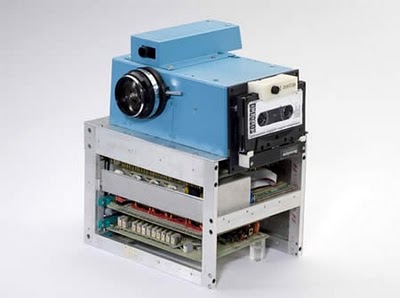
1. World's First Digital Camera (1975): Works Kodak engineer Steve Sasson
 In December 1975, the Kodak engineer Steve Sasson create something that will revolutionize photography: the world's first digital camera. That is about the size of a toaster, and black and white images captured at a resolution of 100 × 100 - or 0.01 megapixels in marketing terminology. The images were stored on cassette tape, taking 23 seconds to write. The camera uses an ADC from Motorola, Kodak film from the camera lens, and a CCD chip from Fairchild Semiconductor - the same technology with a digital camera that is still used today. To playback images, a special computer and a tape reader (pictured below) was built, the output of the grainy images on a standard TV. It took over 23 seconds to read each image from the tape.

2. World's First Motel (1925): Motel Inn


Motel Inn in San Luis Obispo, California, is the world's first motel. Built in 1925 by LA architect Arthur Heineman, who coined the term motel meaning "motor hotel." Motel Inn was originally called the Milestone Mo-Tel. the prise was $ 1.25. Heineman not afford the cost of trademark registration, so that competitors can use the word "motel." The motel is still operating today.


3.  World's First coverAlbum (1938): Smash Song Hits by Rodgers and Hart

 Before Alex Steinweiss (23th), designed the cover, the album was created in 1938 for Columbia Records, sold in plain brown paper wrapper. Album "Smash Song Hits by Rodgers and Hart" is the first album cover in the world.

4. World's First Novel (1007): Tale of Genji

 In 1007, a Japanese court lady put the finishing touches on what is considered the world's first novel. Spanning 75 years, more than 350 characters, and filled with romantic poems, which tells of an emperor's son, his search for love, and many women are eligible along the road. Written by Murasaki Shikibu Japanese nobility.

5.Web Server and Web Site World's First (1990): NeXT computer at CERN

 Info.cern.ch is the world's first address as the web site and web server, running on a NeXT computer at CERN. Web page address in the first air-http://info. cern.ch / hypertex t / WWW / TheProject. html, created by Tim Berners-Lee.

6. World's First Motorcycle (1885): Daimler's "riding car"

 First Motorcycle was designed and built by German inventors Gottlieb Daimler and Wilhelm Maybach in Bad Cannstatt (Stuttgart) in 1885. Is basically a motorcycle, although the inventors called their invention the Reitwagen ("riding car"). It is also the first vehicle to be powered oil.

7. X-rays World's First (1895): his wife's hand Rontgen

 In 1895 Wilhelm Conrad Rntgen, Wurburg University physics professor in Germany, is conducting experiments with electrical discharges in evacuated glass tubes. End of 1895, Wilhelm Rntgen alone at night trial run, this time in the dark and see the light produced in the wall, which he knew was not caused by fluorescent light. He named, rays 'X' or if you prefer; X-ray. After several months of playing with this discovery, he saw that the place of objects in the path of light can produce shadows and creates pictures on the wall. Soon after he used a plate and photographed his wife, Frau Rntgen, putting his hand in the path of X-rays, and created the first X-ray image in the world. In 1901 Wilhelm Rntgen awarded the Nobel Prize in Physics for this discovery.

8.Mouse World's First Computer (1964): by Douglas Engelbart

 The world's first computer mouse was made by Douglas Engelbart in 1964, consists of two gears that are positioned perpendicular to each other - allowing movement on one axis. Ergonomic shape, great button placement - and it's made of wood.

9. Buildings sky scraper World's First (1885): Home Insurance Building in Chicago

 Regarded as the world's first skyscraper because of its unique architectural buildings and a unique bearing a heavy frame, this building was built in 1885 in Chicago, Illinois and demolished in 1931 to build the Field Building (now the LaSalle National Bank Building). It was the first building using structural steel in the frame, but most of the structure consists of cast and wrought iron.

10. World's First Concept Car (1938): Buick Y-Job

 Designed in 1938 by renowned designer Harley Earl of General Motors, Buick Y-Job is considered by most to be the first concept car.

11. World's First MP3 Player (1998): MPMan 32MB

 Released in 1998, Eiger Labs MPMan is the world's first MP3 player, with 32MB of internal memory - expandable to 64MB. Available in models of F10 or F20, the latter with SmartMedia compatibility, this player for $ 69 + shipping. The size is 91 x 70 x 16.5 mm.

12. Crosswords World's First (1913): by Arthur Wynne

 In 1913, Arthur Wynne had the task of designing the weekly puzzle page for Fun, eight-page comic section of the New York World, a major newspaper of the time. When he created what is called the Word-Cross for the Christmas edition, published on 21 December, he did not know that he will start a new craze around the world.

13.Microprocessor World's First (1971): Intel 4004

 In November 1971, a company called Intel introduced the first single chip microprocessor, Intel 4004 (U.S. Patent # 3,821,715), invented by Intel engineers Federico Faggin, Ted Hoff and Stan Mazor. After the invention of integrated circuits that later revolutionized computer design. Intel 4004 integrated circuit made one step further by putting all the parts that make the computer think (ie central processing unit, memory, input and output controls) on a single tiny chip.

14. World's First Magazine (1731): The Gentleman's Magazine

 The Gentleman's Magazine, first published in 1731, in London, is considered to have become the first magazine. Edward Cave, who edited The Gentleman's Magazine under the pen name "Sylvanus Urban", was the first to use the term "magazine", on the analogy of a military warehouse from a variety of materials, which originates from the Arabic makazin "warehouse". And ceased publication in September, 1907.

15. First Photos (1826): "View from the Window at Le Gras"


source :http://jelajahunik.blogspot.com/2010/08/15-penemuan-pertama-di-dunia.html
How To Train Right Brain

Posted by Unknown 0 comments
 Eight games
Pretend to write numbers or symbols of eight sleep? in the air with his left hand and right together. This simple game aims to balance the motor nerve motor nerve left and right. Try and get on this game after breakfast, for two minutes every day.

Thumb games
Raise left hand thumb and little finger right hand, while holding out both hands toward the right. Conversely, raise right hand thumb and little finger left hand, while holding out both hands toward the left. This simple game aims to balance the motor nerve motor nerve left and right. Try and get on this game with friends after lunch, for two minutes every day.

Pattern games
Draw certain patterns on blank paper, with left and right hand together, toward the inside, outside, top, and bottom. Besides aiming to balance the motor nerve motor nerve left and right, this unique game can also explore the visual potential. Try this game for two minutes every day, at least 14 consecutive days.

Specific crawl
Move your right hand simultaneously with the left foot. Then greet, move your left hand in unison with the right foot. Ideally, elbow touching the knee. Also accompanied with a favorite song. Besides aiming to balance the motor nerve motor nerve left and right, this movement can also make the mind open to new things. Try this movement is 10 minutes per day, minimum of 14 consecutive days.

Specific posturing
Rest on the floor with your left knee and right hand. Meanwhile, back straightened right leg and left hand and straightened forward. This position aims to activate certain nerves in general and specifically the right brain. Try this position for 10 minutes every day, at least 14 consecutive days.

Specific relaxing
This tip is a special children. Maintain a relaxing half-prone position. Get used to all these positions when the child slept. The sooner, the better. Get used to all this position when a child is sick, while embraced by the parents. Thus, the child's brain is in alpha frequency and therefore the child will feel peaceful.

Rotated reading
Turn a paper (top down), then read text from right to left. Try and get on this new habit for 2 minutes every day.

Left-Handed foreplay
Tip may also be called Kamasutra is specifically for men who are married. Cumbulah your partner by using the left hand. (For those of you who are not married, do not worry, you can still do it. How? Get married first.)

Left-handed handling
Hold the handle and open the door with his left hand. Try and get on this new habit every day.

Left-Handed Brushing
Brush your teeth with your left hand in the morning. For the afternoon or evening, keep brushing your teeth with your right hand. Try and get on this new habit every day

Left-handed writing
Write your nickname with his left hand on blank paper. Try this new habit at least 10 times a day, at least for 14 consecutive days. Undoubtedly you will find wonder, where on day 3 you can write very easily.

Left-Handed signing
Make your signature with his left hand on a piece of blank paper. Try this new habit at least 10 times a day, at least for 14 consecutive days. Undoubtedly you will find wonder, where two of the 10 signatures that resemble its original form.

source: http://fenz-capri.blogspot.com/2010/08/cara-mudah-melatih-otak-kanan-must-read.html